You can get married in Portugal without living there. A legal civil wedding goes through a Portuguese registry office (Conservatória do Registo Civil): you open a short file at least a month before the date, with your passports, birth certificates and, for most nationalities, a certificate of capacity to marry less than six months old. The registry charges €120, or €200 if the registrar comes to your venue or marries you at the weekend — and many couples skip all of it by marrying legally at home and holding a symbolic ceremony in Portugal.
The rules below are the general ones, and they change: the registry office that handles your file, and your own consulate, confirm what applies to you.
Civil, Catholic or symbolic: the ways to marry in Portugal
Civil wedding. A registrar (conservador) marries you in Portuguese, at the registry office or, by arrangement, at your venue. The simplest legal route for two foreigners.
Catholic wedding. It has legal effect in Portugal, but runs two files side by side: the Church's and the civil registry's.
Civil wedding in religious form. A minister of a church or religious community established in Portugal marries you with legal effect, after the same civil file.
Symbolic ceremony. A celebrant, your own words, any place, any language — and no legal effect.
A Catholic wedding from abroad
The Church's file is usually opened in your home parish and passed between the dioceses, so speak to your priest early: it can take months. Alongside it, the civil preliminary process runs at a conservatória — the parish priest can start it — and ends with a certificate the priest needs before the wedding. Afterwards the parish sends the record to the registry, which registers the marriage.
Why many couples marry at home first
Marrying at your own registry office a few days or weeks before removes every step in the next two sections: no certificates to translate, no interpreter, no registrar's diary to fit, no Portuguese certificate to have recognised at home. The ceremony in Portugal can then be at sunset on a clifftop, in three languages. If you live in Germany, here is how the civil marriage works there; our guide to the symbolic ceremony covers the rest.
Legal requirements to marry in Portugal as a foreigner
There is no residency requirement, and you must both be at least 18, as the government's page on starting the marriage process sets out. Same-sex couples have been able to marry since 2010. A foreign partner usually brings:
A valid passport — or a Portuguese residence permit, if you live in Portugal.
A birth certificate. The law asks only that it has the form your own country requires, but many registries want one issued within the last six months.
A certificate of capacity to marry (certificado de capacidade matrimonial, or certificate of no impediment) from your country's authorities or consulate, issued less than six months before you file unless your country gives it another validity. Where none can be obtained, a declaration can replace it.
Proof that an earlier marriage has ended, if there was one: the divorce decree or the death certificate.
The law is more relaxed than most registries about the paperwork. Foreign documents can be accepted without legalisation unless there is a well-founded doubt, and one in English, French or Spanish may need no translation if the official reads that language. In practice many registries still ask for an apostille and a certified Portuguese translation. Between EU countries, birth certificates and certificates of capacity need no apostille (Regulation (EU) 2016/1191), and a multilingual standard form often spares you the translation.
The civil wedding in Portugal, step by step
Choose the registry and the date. Any conservatória can prepare your file, and any registrar can marry you anywhere in the country. Day, time and place are agreed with the registrar.
File the declaration. You open the processo preliminar de casamento in person, or through a representative with a power of attorney that names your partner and the form of marriage. The online service is built around Portuguese digital identification, so couples from abroad usually file at the desk.
The registrar checks identity, capacity and impediments, and decides within a day of the last check. From a favourable decision you have six months to marry.
The ceremony is in Portuguese. If one of you does not understand it and the registrar does not speak your language, an interpreter must be there — ask the registry who may act; it cannot be one of you. Witnesses are optional unless your identity cannot be checked from your documents.
Afterwards, ask for your marriage certificate (certidão de casamento) and, from the EU, the multilingual standard form, and check whether your home country wants the marriage registered.
How far ahead to start
Six to twelve months before: email the conservatória and your own consulate to confirm the list for your nationalities.
Three to four months before: order the certificates, so they are under six months old when you file, with apostilles and translations.
One to three months before: file. The Ministry of Justice asks for the file at least a month before the date.
The week of the wedding: passports in hand, the interpreter briefed, the registrar's arrival agreed with your venue.
What the registry charges
At the time of writing, the process and the registration cost €120 at the registry office during opening hours. Elsewhere, outside opening hours, or on a Saturday, Sunday or public holiday, it is €200, and you arrange or agree the registrar's transport. Certificates, apostilles, translations and any interpreter come on top.
Where to get married in Portugal: the regions
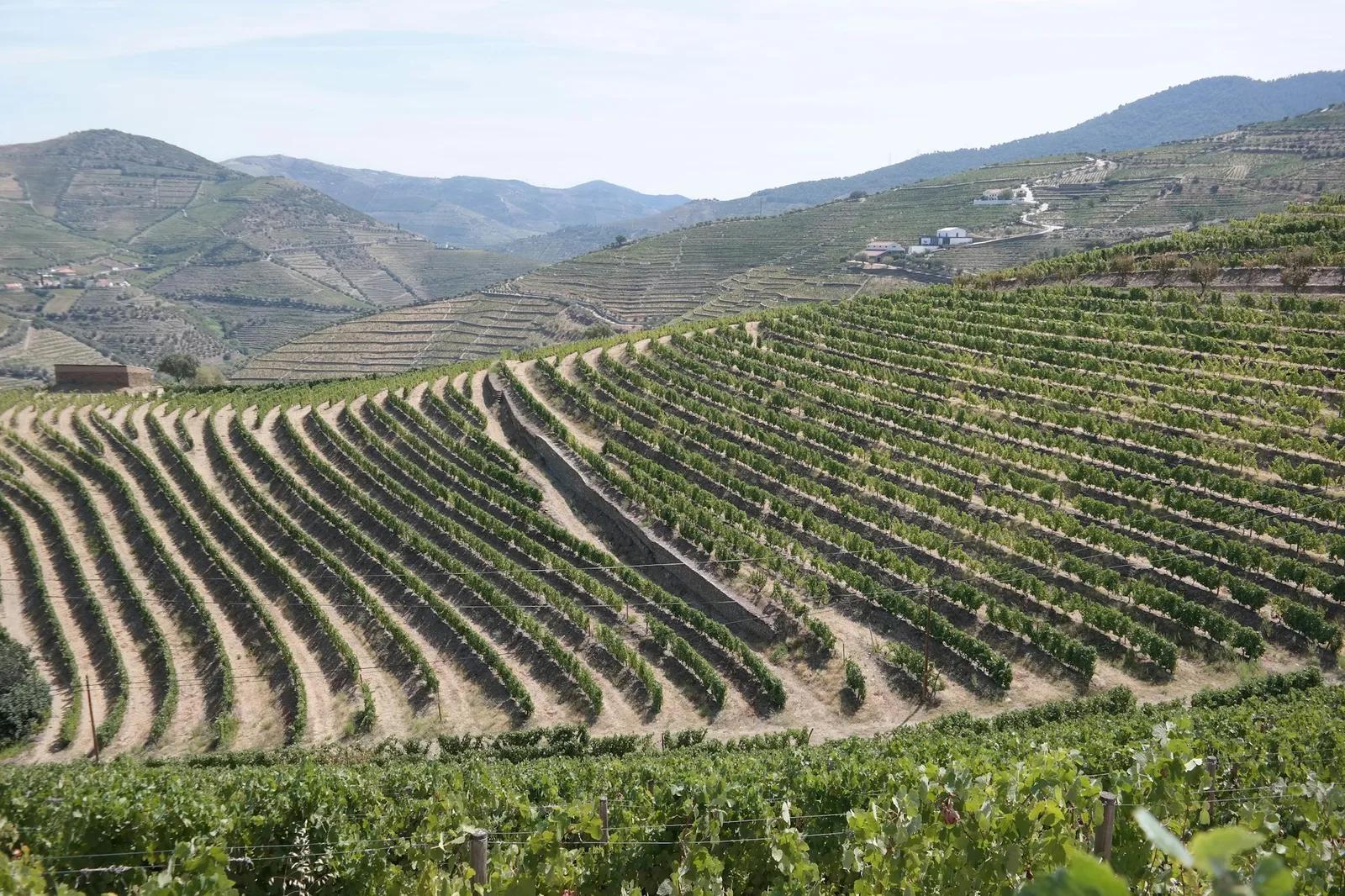
Terraced vineyards on the hills of the Douro Valley
Lisbon, Sintra and Cascais — palaces and quintas in the Sintra hills, the coast, the city. One airport for everybody, the widest choice and the highest prices.
Comporta and the Alentejo — dunes, rice fields and cork oaks near the coast; whitewashed estates around Évora inland. Quiet, spacious and very hot inland in midsummer.
The Douro Valley — terraced vineyards above the river, one and a half to two hours by road from Porto. The harvest from mid-September keeps wine estates busy.
Porto and the Minho — granite manor houses and green hills around Braga, Ponte de Lima and Viana do Castelo. Often better value than Lisbon, and the rainiest part of the mainland.
The Algarve — cliffs, coves and resorts near Faro airport. The longest dry season, but crowded and dearer in July and August.
Madeira and the Azores — islands for a smaller wedding, with more planning for flights and suppliers' travel.
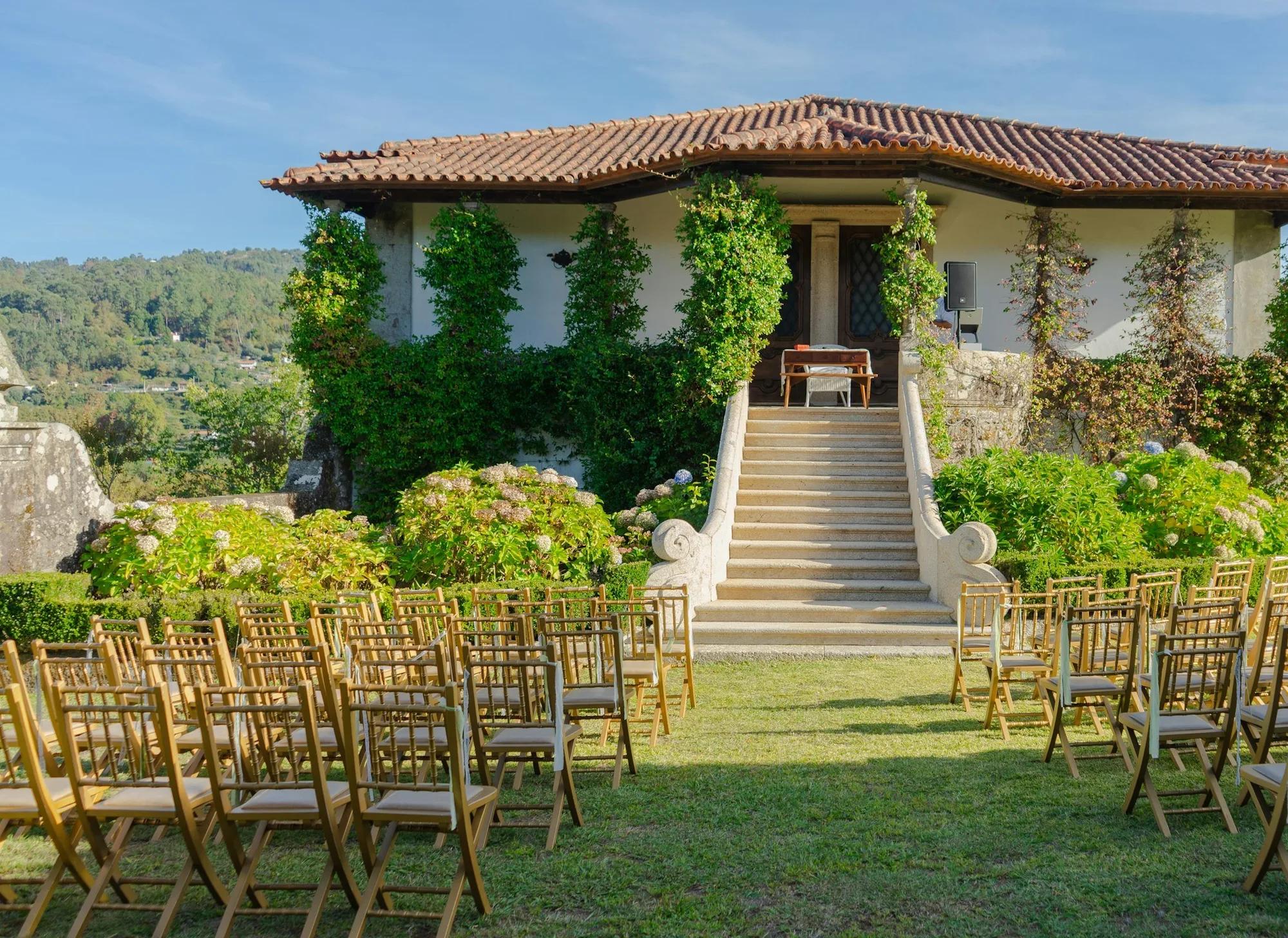
Many weddings from abroad happen at a quinta, a country estate that hosts the ceremony, the dinner and the party. Our guide to choosing a quinta covers renting the space versus a menu per guest, the kitchen rule and the music curfew. To see who is free on your day, search venues around Lisbon or type the town you have in mind.
The best time of year for a wedding in Portugal
May to October is the season. June and September are popular and book early; summer Saturdays go first.
July and August are hot inland. The coast keeps an Atlantic breeze, but the Alentejo and the Douro regularly reach the mid-30s °C: hold the ceremony late in the afternoon, with shade and water.
The light is late. In June the sun sets after 21:00 in Lisbon and Porto; at the end of September, around 19:20.
Rain is possible. The north can see it into June and again from October; any outdoor ceremony needs a covered plan B.
Fridays, Sundays, May and October cost less and leave more choice; winter is mild on the coast, with short days.
What a destination wedding in Portugal costs
Rough ranges for 2026, for 60 to 100 guests. Region, season, weekday, guest count and hours move every one of them, and VAT (IVA, 23% on the mainland) is often listed separately, so ask whether a quote includes it.
Venue hire (quinta or estate): €3,000–€12,000 for the day; palaces and top estates well above. Many quintas in the north sell a menu per guest that includes the space.
Food and drinks: about €70–€100 per guest in the north and inland, €120–€200 in Lisbon, Sintra, Comporta and the Algarve.
Wedding planner: €3,000–€10,000 for most destination weddings, more for several days of events.
Celebrant for a symbolic ceremony: €500–€1,500.
Photographer, full day: €2,000–€4,500.
DJ with sound and light: €1,000–€2,000.
Flowers and decoration: €2,000–€6,000.
Bridal hair and makeup with a trial: €300–€600.
A worked example
Lena and Jonas, 80 guests, a quinta near Sintra on a Saturday in mid-September:
Quinta: €7,000
Food and drinks, 80 × €140: €11,200
Planner: €5,000
Celebrant: €900
Photographer: €3,200
DJ: €1,500
Flowers and decoration: €3,500
Hair and makeup: €600
Shuttle bus for the guests: €800
That is about €33,700. The same wedding on a Friday in late May at a quinta in the Minho — €3,500 for the venue, €90 per guest and slightly lower prices elsewhere — comes to roughly €23,000. On Eventadore every supplier is in the search, and with your date and number of guests each card shows what that day costs, all in, travel included — which matters when a photographer drives from Porto to the Algarve. For the full breakdown, read what a wedding in Portugal costs.
Name the airport. Lisbon, Porto or Faro on the mainland, Funchal or Ponta Delgada on the islands — and how long the drive is.
Hold rooms near the venue early, because summer fills fast.
Lay on a shuttle from the hotel to the venue and back, so nobody drives after the party; rural quintas are often far from any taxi.
Put it all on one page. A free wedding website on Eventadore lets each guest read the day, the journey and where to stay in their own language — it has eight — and reply on the same page; see what your wedding website can do.
Why a local planner helps, and how to book from abroad
A planner who speaks Portuguese talks to the conservatória for you, knows which quintas accept an outside caterer and when the music must stop, and works with suppliers who know each other. Ask what they charge (a fixed fee or a percentage) and whether they handle the civil file or only the celebration. You can search wedding planners and celebrants for a symbolic ceremony the same way as venues.
When you book in another country, know who you contract with. On Eventadore the checkout names each supplier's legal name, town and country, and whether they offer as a business or as a private person. The price is locked the moment you add a supplier to your Planning — the supplier only says whether they are free — and you can message any supplier from their profile first. Here is how paying works.
Frequently asked questions
Can foreigners get legally married in Portugal?
Yes, and neither of you needs to live there. You open a preliminary process at any conservatória with your passports, birth certificates and usually a certificate of capacity to marry, and a registrar marries you in Portuguese, with an interpreter if you need one.
How long does the paperwork take?
Allow two to three months to gather the documents, and file at least a month before the date. The registrar decides within a day of the last check; the slow part is usually getting certificates and translations from home.
Can we have the civil ceremony at our quinta or on the beach?
Often, yes: the place is agreed with the registrar, who can come to your venue for €200 instead of €120, plus transport. Ask early, because the registrar has to agree, and ask your planner whether a spot on a public beach needs a permit.
Is a symbolic ceremony in Portugal legally valid?
No. It has no legal effect, wherever it takes place. Couples who choose it marry at their own registry office, before or after, and the ceremony in Portugal can be anywhere, in any language.
Do we need a lawyer to get married in Portugal?
No. You can file at the registry yourselves. If you cannot come before the wedding, a representative — a lawyer, a solicitor or another person you trust — can file for you with a power of attorney.
Can same-sex couples marry in Portugal?
Yes, since 2010, with the same process and documents. Whether your home country recognises the marriage depends on its own law, so check before you plan around it.