Déroulé de mariage : le timing du jour J, heure par heure
Déroulé de mariage avec deux exemples de timing du jour J, heure par heure : préparatifs, cérémonie, photos, dîner, discours, première danse et marges.
L'équipe Eventadore11 min de lectureMis à jour le 26 octobre 2026
A typical wedding day timeline with a 14:00 ceremony runs from breakfast to well after midnight: hair and makeup in the morning, the ceremony at 14:00, drinks and photos until about 17:00, dinner from 18:00 with speeches between the courses, the first dance around 21:30 and the last song between 01:00 and 02:00. Build your wedding day schedule backwards from the ceremony time, give every change of place 15 to 30 minutes of buffer, and send the final version to everyone who works on the day a week before.
Sample wedding day timeline: ceremony at 14:00, dinner and dancing
Lena and Jonas marry on a Saturday in June: ceremony and reception at the same country venue, 80 guests, a photographer for ten hours and a DJ from the first dance. The sun sets at about 21:15.
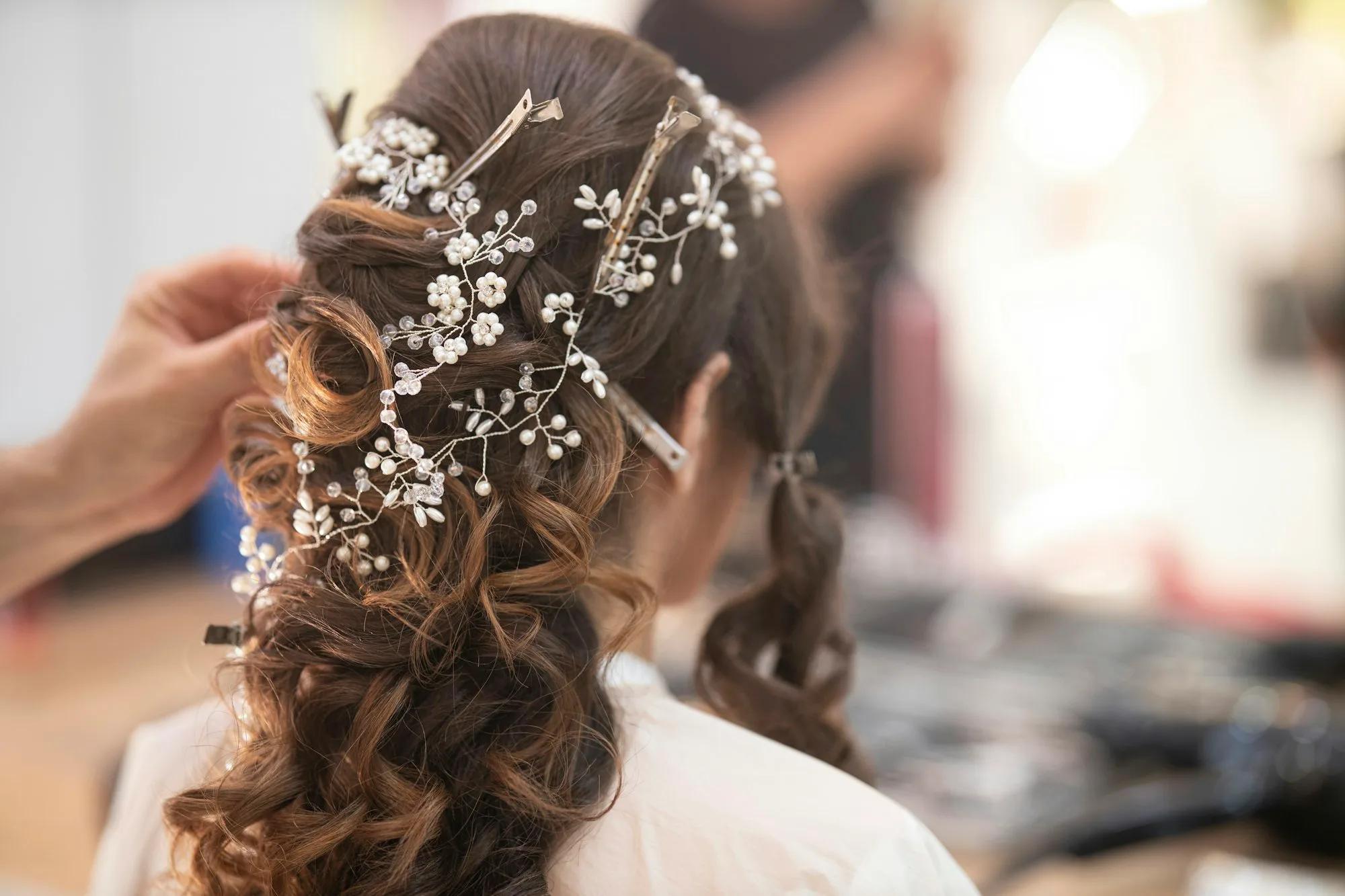
08:30 Hair and makeup begin, bridesmaids and mothers first. With a hairstylist and a makeup artist side by side, four people take about three and a half hours.
10:00 The florist brings the bouquet and buttonholes; at the venue, tables and decoration go up.
12:00 The photographer arrives for the details — rings, shoes, invitation — and the last touches of makeup.
12:30 Getting dressed: allow 30 minutes.
13:00 A first look and a few portraits, if you want them: 20 minutes that free time later.
13:30 Guests arrive; a musician plays.
14:00 The ceremony.
14:45 Congratulations and a toast. With 80 guests, this alone can take half an hour.
15:15 A photo of everyone, then eight family groups at two to three minutes each.
15:45 Coffee and cake or canapés, while you two slip away for 30 minutes of portraits.
17:00 A quiet hour: guests check in, you sit down, the venue turns the room for dinner.
18:00 Guests take their seats, your entrance, a short welcome, then the starter and the first speech.
19:15 Main course.
20:15 Two more speeches while dessert is plated.
20:30 Golden hour: 20 minutes outside with the photographer, about 45 minutes before sunset.
21:00 Dessert and the cake.
21:30 The first dance, and the DJ opens the floor.
22:00 The photographer leaves.
23:30 Late-night food.
01:30 Last song and a send-off; the venue closes at 02:00.
Three fixed points carry this day: the ceremony, dinner at 18:00 (the kitchen cooks to that time) and the sunset. Everything else can move by a quarter of an hour.
Wedding day schedule two: a civil ceremony in the morning, a party at night
Where only the civil wedding counts in law, as in Germany or France, many couples marry at the registry office in the morning with close family, have lunch, take a real break and celebrate with everyone in the evening. This day is in September, when the sun sets around 19:30.
08:30 Hair and makeup for the two of you: about two hours.
10:40 Leave for the registry office. Many ask you to come early: Heidelberg's, for example, plans 15 to 20 minutes for the ceremony and asks couples to report 15 minutes before.
11:00 The civil ceremony, with your closest family and the witnesses — the rooms are often small.
11:30 Sparkling wine outside and a group photo. Ask beforehand whether confetti or rice is allowed.
12:30 Lunch for family and witnesses.
15:00 A real break: rest, change, eat something.
16:30 The DJ sets up and checks the sound at the party venue.
18:00 Guests arrive for drinks.
18:45 Golden hour: 20 minutes of portraits while guests have their drinks — in September the light goes early.
19:15 Your welcome, and the buffet opens.
20:30 Speeches: three at most, five minutes each.
21:00 The cake, then the first dance.
01:00 Last song, or whenever your venue's curfew falls.
The break is what makes this day work: three hours between the two events let you eat, rest and arrive at the party as hosts rather than survivors.
How to make your own wedding day timeline
Fix the ceremony time first. Everything hangs on it, and registry offices, churches and celebrants have slots.
Work backwards to the morning. Ceremony time, minus travel and 15 minutes, minus 30 minutes to dress, minus hair and makeup for everyone: that is when the first person sits in the chair. Our guide to bridal hair and makeup has the timings.
Work forwards to the meal. Ask the caterer when food is served and how long each course takes.
Mark what cannot move: sunset on your date, the venue's curfew and any limit on outdoor music, the last shuttle or taxi.
Add buffers where days run late (see below).
Count the hours each supplier must be there, set-up included, and book them for those hours. When you search for photographers or DJs on Eventadore with your date and number of guests, each card shows what that day costs, all in, travel included.
Share a first version early, and freeze it a week before.
With a free account on Eventadore, the Running order in your Planning holds all of this: choose the time, write what happens, press Add, and the moments line up by time, for both of you on every device. Press Draft our running order and the planning assistant writes a first version for you to change.
How long each part of the wedding day takes
Getting ready
Bridal hair takes about an hour, up to 90 minutes for an elaborate updo, and bridal makeup about an hour. Each bridesmaid or mother needs 30 to 45 minutes per service. Aim to be finished about 90 minutes before the ceremony.
The ceremony
A civil ceremony at a registry office often takes 15 to 30 minutes, a symbolic ceremony 30 to 45. A church wedding takes 30 to 45 minutes without a Mass and about an hour with one; an Orthodox wedding 45 minutes to an hour. Your parish or registry office confirms what applies to you.
Photos
Family groups take two to three minutes each, so eight groups are about 25 minutes. Couple portraits work best split in two: 30 minutes in the afternoon, 20 at golden hour. Choosing a wedding photographer covers how many hours you need.
Dinner and speeches
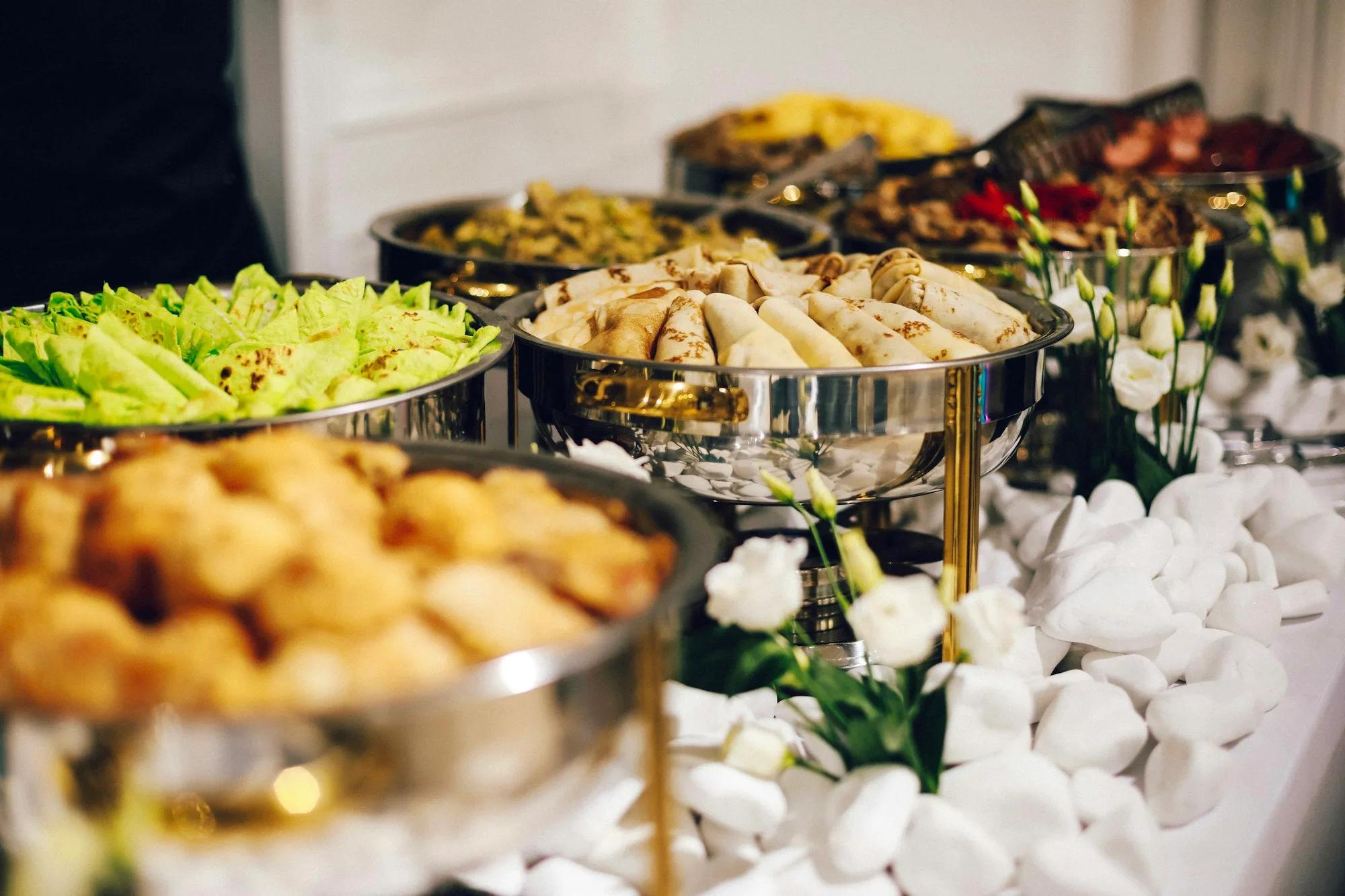
A plated dinner of three courses takes two to two and a half hours with speeches, a buffet about 90 minutes. Keep each speech to three to five minutes and spread them between the courses, so the food does not wait. Our wedding catering guide explains the service styles.
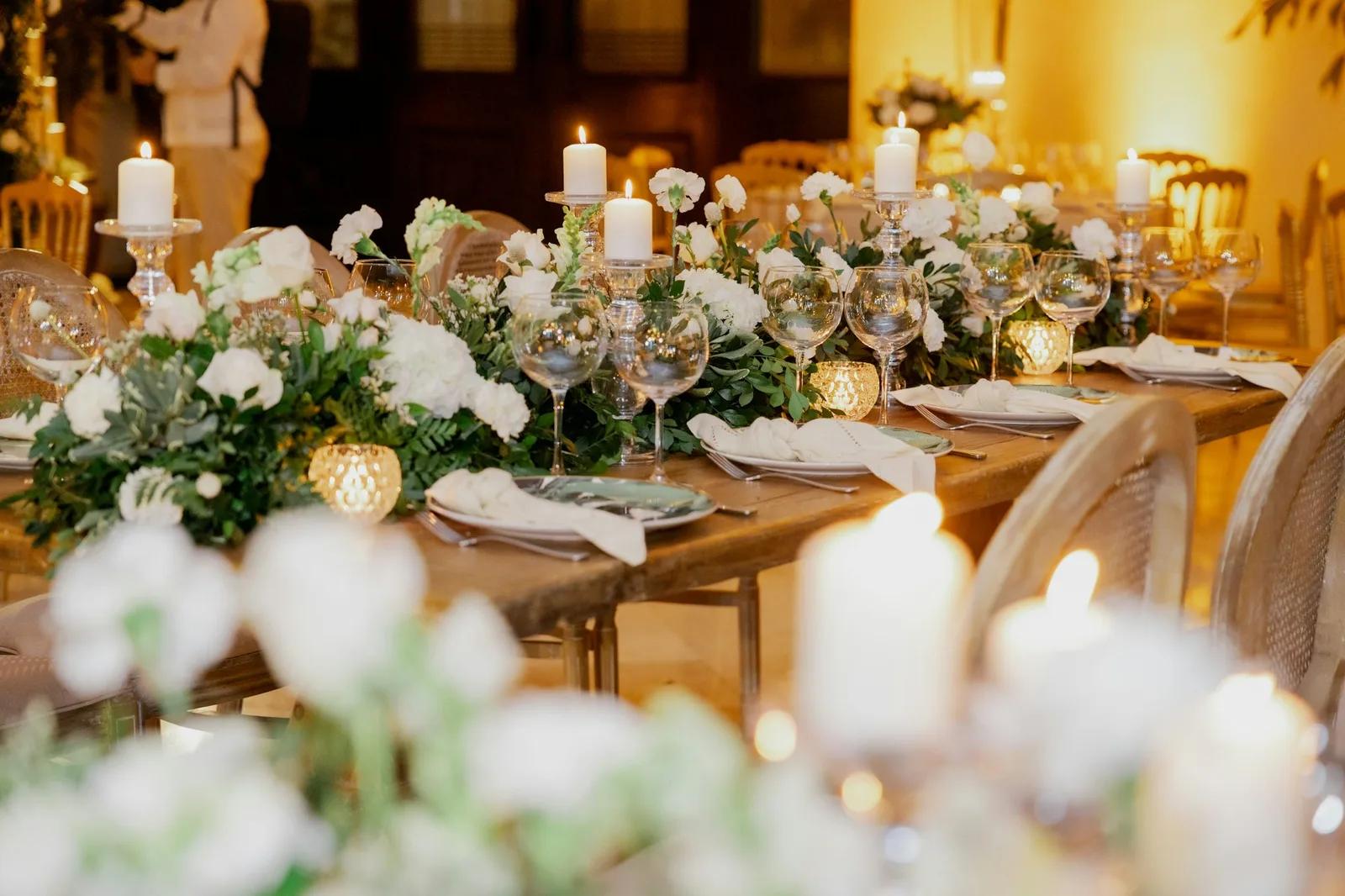
A candlelit reception table with white flowers, glasses and folded napkins
The evening
The first dance lasts two to three minutes; most couples shorten the song. Cutting the cake takes ten to fifteen minutes with photos. Most DJs want 60 to 90 minutes to set up, a band longer, and both should be done before guests arrive — see DJ or live band.
Golden hour: when to plan your wedding portraits
Golden hour is the last hour or so before sunset, when the light is low, warm and soft. Plan 15 to 20 minutes of portraits 45 to 60 minutes before sunset, and tell the caterer, so that no course is served while you are outside.
Sunset in local summer time, rounded (it moves by a minute or two from year to year):
Mid-May: Berlin 20:55 · Paris 21:25 · Madrid 21:23 · Lisbon 20:41 · Warsaw 20:23 · Athens 20:28
Late June: Berlin 21:33 · Paris 21:57 · Madrid 21:48 · Lisbon 21:04 · Warsaw 21:01 · Athens 20:50
Mid-August: Berlin 20:33 · Paris 21:07 · Madrid 21:13 · Lisbon 20:31 · Warsaw 20:01 · Athens 20:19
Mid-September: Berlin 19:23 · Paris 20:04 · Madrid 20:24 · Lisbon 19:45 · Warsaw 18:52 · Athens 19:34
Mid-October: Berlin 18:12 · Paris 19:02 · Madrid 19:35 · Lisbon 18:59 · Warsaw 17:42 · Athens 18:48
When the clocks go back at the end of October, sunset comes an hour earlier still, so in winter the portraits belong before dinner.
Where wedding days run late
Weddings run late by five minutes here and ten there. The usual places:
Getting dressed. Add 15 minutes; buttons and lacing need two people.
Every change of place. Travel time plus 15 minutes for parking, walking and finding the room.
Congratulations. They take longer than any group photo.
Family photos. Send the photographer a list of groups with names, and ask one relative who knows everyone to gather them.
Speeches. Give each speaker a slot and a length. Ten minutes over, three times, is half an hour.
Before the first dance. Tables may have to move and the lights change; ask the venue how long that takes.
Build 15 to 30 minutes of slack into the afternoon. If you end up ahead, nobody minds a longer drinks reception.
How the wedding day changes across Europe
The order is the same everywhere — ceremony, drinks, food, dancing — but the clock is not. Some common patterns; your venue knows the local ones:
Germany: coffee and cake (Kaffee und Kuchen) often follow an afternoon ceremony, with the wedding cake cut there or kept for dessert; a late-night snack is common.
Portugal: after the ceremony comes the copo de água, the long reception meal; the cake is cut after the meal or straight after the ceremony, and the dance often opens with the bride and her father.
Spain: the ceremony, a cóctel of around two hours, then the banquet; daytime weddings often start around 12:00 or 13:00, and the open bar (barra libre) can last for hours.
France: the civil ceremony at the mairie must come before a religious one; the vin d'honneur lasts one to two hours, dinner often starts around 20:00, and the pièce montée comes at the end of the meal.
Poland: parents often welcome the couple with bread and salt, several hot courses come through the night, the oczepiny happen around midnight, and many families celebrate a second day, the poprawiny.
Greece: an Orthodox ceremony lasts 45 minutes to an hour, guests receive koufeta (sugared almonds), and in summer the ceremony is often in the early evening, when the heat breaks.
Who needs your wedding day timeline
The venue or its coordinator: the full version, with set-up and clearing times.
The caterer: guest arrival, when each course goes out, the speeches, the late-night food.
Photographer and videographer: addresses, the family groups with names, the golden-hour slot.
DJ or band: set-up, the entrance song, quiet music during dinner, the first dance, the last song, the curfew.
Hair and makeup: who, in which order, from when, and where.
Officiant, florist and transport: their arrival time and the phone number of the person in charge.
Two people you trust — a best man, a maid of honour or a planner — who hold the plan on the day so you two do not have to.
Your guests: only arrival, ceremony, dinner, the end and the last bus or taxi.
Send the final version a week before, with one contact for the day who is not one of you. If you make your wedding website on Eventadore, its The day section shows the events of your guest list and the times of your running order.
Wedding day timeline: frequently asked questions
How long is a typical wedding day?
For the couple, about 16 to 18 hours, from hair and makeup at about 08:30 to the last song at 01:00 or 02:00. For guests it is usually 10 to 12 hours from the ceremony on.
What time should the wedding ceremony start?
Between 13:00 and 15:00 suits most days with dinner: enough morning to get ready, time for drinks and photos, and dinner at about 18:00. A ceremony at 16:00 or 17:00 suits hot summers and countries that eat late. Check the slot with your registry office, church or celebrant before you print anything.
When should we cut the cake and have the first dance?
Many couples cut the cake at the end of dinner, as dessert, and go straight into the first dance, which opens the dancing. In Germany the cake often comes in the afternoon with coffee instead. If your photographer leaves at 22:00, dance before then.
How many hours do we need a photographer and a DJ for?
Count them from your timeline. From getting ready to a few songs after the first dance is often eight to ten hours for a photographer; a DJ usually plays from the drinks or the first dance to the last song, plus set-up. Ask what each further hour costs before you book.
When should we send the timeline to our suppliers?
A first version once the main suppliers are booked, two to three months before, so they can tell you what does not work. The final version a week before, with addresses, phone numbers and one contact for the day.