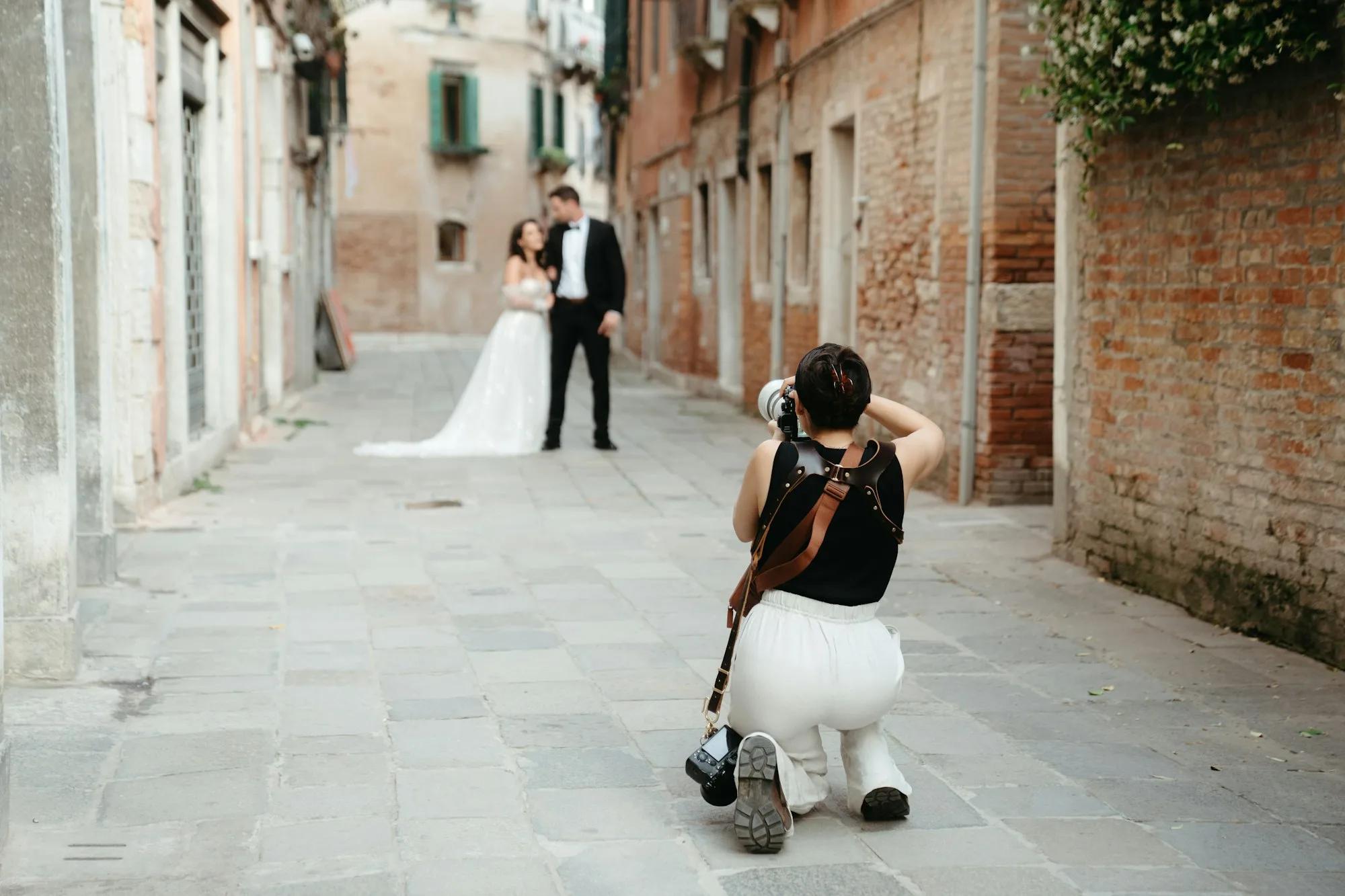
To choose a wedding photographer, decide on the style you love first, work out how many hours of your day you want covered, then compare complete wedding galleries — not highlight reels — and exactly what each package includes. As a rough guide for 2026, a full day with an experienced wedding photographer costs about €1,200–3,500 in most of Europe, and €4,000 or more with sought-after names or in destination hotspots.
For a Saturday between May and September, book 9 to 12 months ahead. A photographer can only sell each date once.
Wedding photography styles: which one is yours?
Style is the first filter: it decides how your day feels in the pictures, and how the photographer behaves on the day. Most mix styles, but almost everyone leans one way.
Documentary (reportage). The photographer observes and rarely directs. You get the moments as they happened: your father's face during the speech, the flower girl asleep under a table. Best if you hate posing — but ask how they handle family groups, which every wedding still needs.
Editorial. Inspired by fashion magazines: more direction, composed portraits, strong light, mixed with candid moments. Best if you want striking portraits and don't mind 30–60 minutes of being guided.
Fine art. The photographer's eye comes first: soft light, careful composition, often film or film-like tones, pictures made to be printed large. Best if each frame matters more to you than catching everything.
Classic (traditional). Posed, complete and reliable: the entrance, the rings, the kiss, every family combination. Best for big families and couples who want the full record.
Then there is the edit, which is separate from the style: light and airy (bright, pastel, soft shadows), dark and moody (deep contrast, rich colour), true-to-life colour, or black and white. Check skin tones in every edit: they should look like skin indoors, outdoors and at sunset, never orange or grey.
How many hours of wedding photography do you need?
Hours drive the price more than anything else, so build them from your schedule, not from a package name. Typical coverage:
1–2 hours: a civil ceremony at the registry office, a few portraits and the toast afterwards.
4–6 hours: the ceremony, family groups, couple portraits and the start of dinner.
8–10 hours: from getting ready to the first dance — what most people mean by a full day.
10–12 hours: all of that plus the party, the cake and the first hour on the dance floor.
Take a ceremony at 14:00. The photographer arrives at 12:00, when hair and makeup are nearly done; drinks and family groups follow the ceremony until 16:00, then dinner and speeches, with a 20-minute walk for portraits between courses, about an hour before sunset. After the first dance at 21:30 and a few songs, the photographer leaves at 22:00: ten hours. Our sample wedding day timeline lays out the whole day, and bridal hair and makeup shows when getting ready really starts.
Do you need a second photographer?
A second shooter earns their fee when two things happen at once: both of you getting ready in different places, a ceremony where one camera faces you and one faces your guests, more than about 100 guests, or a day across two venues. For 40 guests in one place, one good photographer is usually enough.
What does a wedding photographer cost in 2026?
As a rough guide for 2026, for an experienced photographer:
Registry office only, 1–2 hours: €200–600
Half day, 4–6 hours: €800–2,000
Full day, 8–10 hours: €1,200–3,500
Sought-after names and destination specialists: €3,500–6,000 and more
By the hour: often €150–250 per hour, usually with a minimum number of hours
Extras come on top: a second photographer (about €400–1,000), a printed album (roughly €300–1,500, depending on size, pages and binding), an engagement shoot (around €200–500), and travel or a night's stay when the wedding is far from home.
What moves the price: region (big cities and hotspots such as Paris, Santorini or the Amalfi Coast cost more), season (Saturdays from May to September are in highest demand; a Friday, a Sunday or a date between November and March often costs less), hours, experience, travel and extras. Across Europe the spread is wide: a full day in Germany, France or the UK typically lands between €1,200 and €3,000, while in Poland, Portugal or Greece you will often find experienced photographers from around €1,000. Photography is one of the larger lines in most budgets — see how to split a wedding budget.
A worked example
Lena and Jonas marry on a Saturday in June, with 80 guests at one venue. Their first quote was €3,900: ten hours, a second photographer for six of them, and an album. Then they decided what mattered.
Kept: all ten hours, because getting ready and the first dance were the photos they wanted most.
Dropped: the second shooter (€600). One venue, 80 guests, and both of them getting ready in the same hotel.
Postponed: the album (€600). They will choose it once they have seen the gallery, after checking that the price stays the same.
New total: €2,700 for the same photographer, the same style and the same day.
To see real figures rather than averages, search wedding photographers on Eventadore with your date and number of guests: every card then shows what that day costs, all in, travel included. Without a date, you see each photographer's price range.
What should a wedding photography package include?
Two quotes at the same price can be very different offers. Get these in writing before you compare:
Hours and who comes — the exact hours, and the name of the photographer who will be there. In a studio it is not always the one whose work you saw.
Number of photos — a rough guide is 50–100 edited photos per hour, so a full day usually ends up between 400 and 1,000. More is not automatically better.
Delivery time — a sneak peek of a few photos within days is common; the full gallery usually takes 4–12 weeks, longer in peak season. Put the date in the contract.
The online gallery — how long it stays online and whether you and your guests can download full resolution.
Prints and album — included, optional or not offered; size and number of pages.
Overtime — the price of each hour beyond the package.
Travel and stay — included, per kilometre or a flat fee.
Back-up — a camera that records to two memory cards, a second camera body, and who replaces the photographer if they fall ill.
Full gallery or a selection?
Some photographers deliver every good frame, lightly edited; others hand over a smaller selection, each picture finished to the same standard. A full gallery means more of your guests; a selection means fewer weak photos. RAW files — the unedited originals — are rarely included, because most photographers see the edit as part of their work.
How to read a wedding photographer's portfolio
A portfolio is the best 40 photos from 40 weddings; you need to see one whole day. Ask for two or three complete galleries, ideally from days like yours: a dark church, a marquee at night, a summer noon in full sun. Then look for:
Consistency — is photo 300 as good as photo 3?
Difficult light — the dance floor, an evening reception indoors, harsh midday sun.
People, not only details — your grandmother laughing matters more than the napkins.
Family groups — sharp, everyone's eyes open, done quickly.
Skin tones — natural across different skin colours and every kind of light.
Then talk to them, by video call if need be: they will spend ten hours closer to you than most guests. On Eventadore, a photographer's profile opens with their answers — their style, what they cover, their delivery time and their languages — and you can filter the search by style and language. Reviews there come only from couples who booked that photographer and whose wedding has already happened, and nothing in the order of results can be bought.
Who owns your wedding photos?
In most of Europe the photographer keeps the copyright to your wedding photos, and you receive the right to use them. In Germany copyright cannot be transferred at all — only rights of use can be granted (§ 29 of the German Copyright Act). That is normal and rarely a problem, as long as the contract says clearly what you may do:
print the photos wherever you like, not only through the photographer's lab;
share them online and with your family;
whether you are expected to credit the photographer when you post.
It works the other way round, too. If the photographer wants to show your photos on their website, social media or adverts, have it written into the contract and decide: yes, no, or only some — none of the children, say. The rules differ by country and can change, so the contract you sign is what counts.
When to book, and what to ask before you sign
Book your photographer once you have your date and venue. For a Saturday between May and September, 9–12 months ahead is a sensible target, and sought-after photographers are often booked earlier still; a weekday or a winter wedding leaves more room. Before you sign, ask:
Are you free on our date, and will you be the one taking the photos?
Who replaces you if you are ill on the day?
How much do you direct, and how do you handle family groups? Send them a list of 8–12 groups beforehand.
What is the deposit, when is the rest due, and what happens if either of us cancels?
Will you need a meal and a break? Plan a hot meal and a seat for them at dinner.
Do you know our venue? Some churches and registry offices limit where a photographer may stand during the ceremony, and whether flash is allowed.
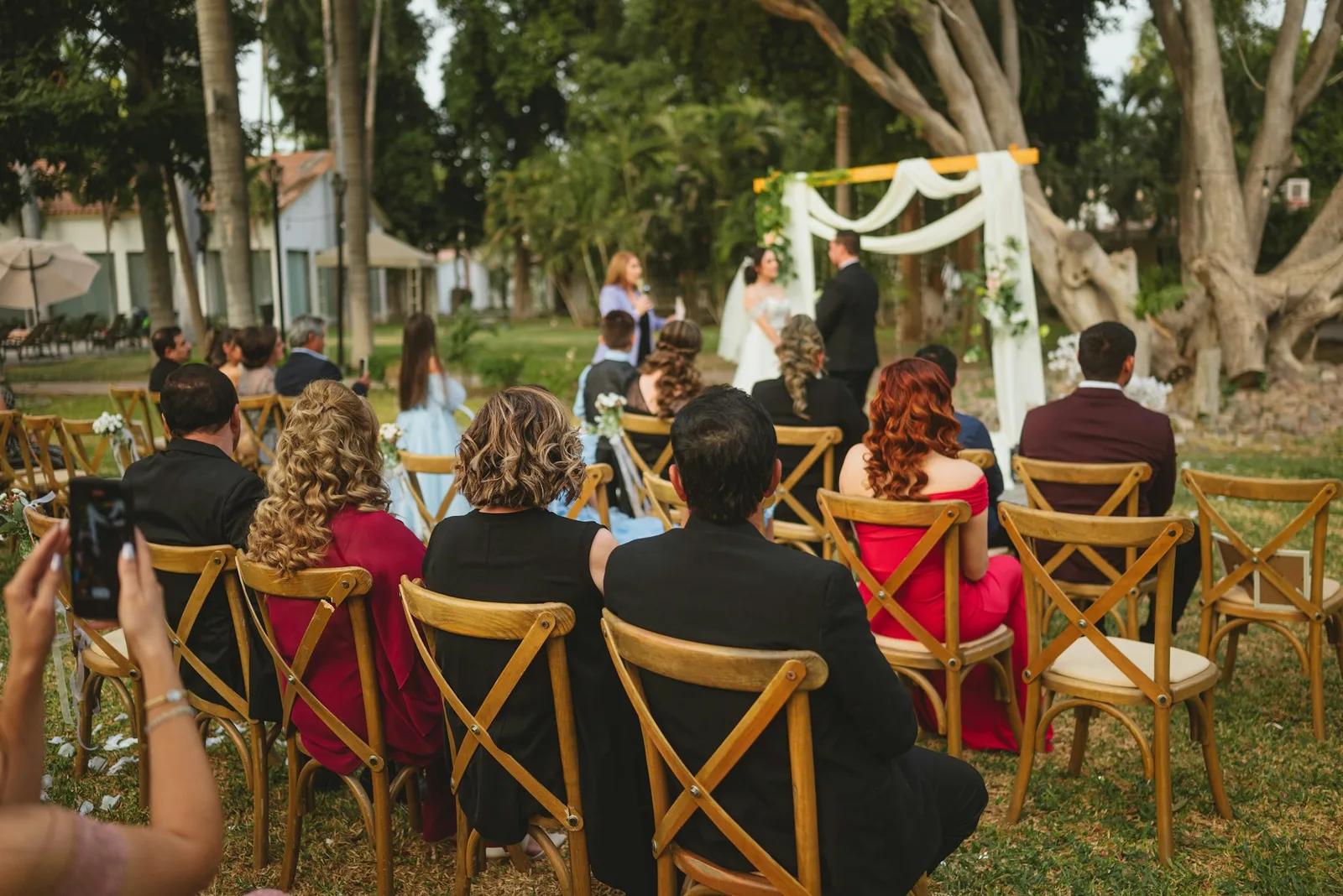
Guests seen from behind at an outdoor wedding ceremony, one of them holding up a phone
When you add a photographer to your Planning on Eventadore, their price is locked: nobody renegotiates it later, the photographer only says whether they are free. Reserving holds a booking fee on your card that is charged only if they say yes, and that fee is already inside the price. The checkout names who you contract with, and the deposit and the rest go to the photographer directly — how paying works.
Photographer and videographer: one team or two?
If you want a film as well, decide early: the two work side by side all day. A team that works together knows how to stay out of each other's shots; two independents manage just as well if they talk before the day. Judge wedding videographers the way you judge photographers: complete films, not trailers. And if you want your guests to have fun in front of a camera, a photo booth takes that job off your photographer's hands.
Frequently asked questions
How far in advance should we book a wedding photographer?
For a Saturday between May and September, aim for 9 to 12 months ahead, and earlier for a photographer who is in high demand. For a weekday or a winter date, a few months is often enough. Book the venue first, because the photographer needs a fixed date.
How many photos do you get from a wedding photographer?
Roughly 50–100 edited photos per hour of coverage, so a full day usually brings 400 to 1,000. Ask for the number for a wedding of your size before you sign.
How long does it take to get wedding photos back?
Many photographers send a few sneak-peek photos within days. The full gallery usually takes 4 to 12 weeks, and longer after a busy summer. Make sure the delivery date is in the contract.
Is a wedding photographer cheaper on a weekday?
Often, yes. Saturdays from May to September are the dates every couple wants, so a Friday, a Sunday or a winter date can cost noticeably less and leaves more photographers free. Ask for a price for two or three dates.
Do we have to feed our wedding photographer?
It is usual, and in your interest: ten hours of work need a meal and a short break. Seat them where they can see the room and serve them when you are served, so they are ready for the speeches.